Merion Golf Club
The clubhouse at Merion Golf Club in Ardmore, Pennsylvania was designed in 1911 by Furness, Evans and Company. It still hides an 1824 stone farmhouse inside it, and a two-story locker room that has watched Bobby Jones finish the Grand Slam and Ben Hogan win the 1950 U.S. Open.

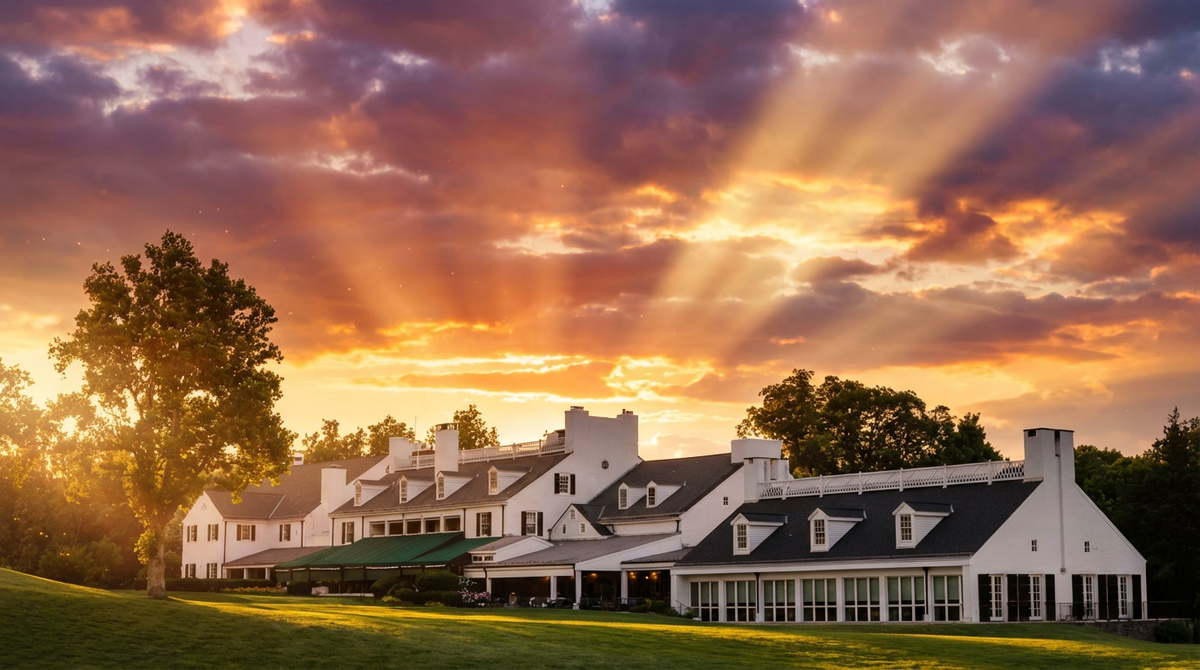
In Ardmore, Pennsylvania, there is a golf clubhouse that has hosted Bobby Jones and Ben Hogan, and still conceals a history even deeper than you may think.
The clubhouse at Merion Golf Club was designed in 1911 by the firm Furness, Evans and Company, a group with deep ties to the Philadelphia area, notably designing the Fisher Fine Arts Library in 1888. When the Merion Cricket Club acquired 117 acres of farmland to develop a longer golf course, the tract was described as "worn-out farmland, none too well adapted … for golf course purposes," though it did have a stone farmhouse, originally built in 1824, that was thought to serve as a potential clubhouse. Furness and Co. designed the new clubhouse to incorporate that old stone farmhouse, and you can still view the keystone in the rear elevation of the current building. It is not the only iconic American clubhouse that started as a farmhouse.
The clubhouse is a classic Colonial Revival, and has a locker room that feels like a relic of the past. It has two stories of mint-green metal lockers, overseen by clerestory windows above. Like many of America's most storied golf clubs, the golf course is the luxury, and the clubhouse is a place to change your shoes.

Charles Schwab is offering new clients up to $1,000 when they open an account and transfer a qualifying amount of cash or equities. Click here to claim your new account reward!
Best Clubhouse's Tour of Merion Golf Club's Clubhouse

J. Campoli & Sons, Northern New Jersey's premier luxury general contractor, has delivered high-end residential and commercial construction in Bergen County since 1946. We have provided three generations of craftsmanship for clients who don't compromise. Learn more.
Key Details
- Club: Merion Golf Club
- Location: Ardmore, Pennsylvania
- Clubhouse Architect: Furness, Evans and Company (1911)
- Year Built: 1824 (original stone farmhouse); 1911 (clubhouse designed around it); expanded 1948
- Architectural Style: Colonial Revival
- Notable Features: Core of the current clubhouse is an 1824 stone farmhouse, built 72 years before the golf club existed; designed by the firm of Frank Furness, the most important Philadelphia architect of the Victorian era, whose draftsman in 1873 was Louis Sullivan; partner Allen Evans, who almost certainly drew the 1911 clubhouse, was a founding member of the Merion Cricket Club and designed every one of its clubhouses; two-story men's locker room with mint-green metal lockers and clerestory windows above; Trophy Room floor scarred with spike marks from Bobby Jones, who completed the Grand Slam on the property in 1930; club archives hold 95,000 digitized documents, including a set of Ben Hogan's stainless-steel irons and two original wicker-basket flagsticks; host of five U.S. Opens (1934, 1950, 1971, 1981, 2013) and more USGA championships than any other course in America; National Historic Landmark since 1992
The clubhouse sits behind the 18th green, up the hill from the fairway where Ben Hogan hit the most famous 1-iron in golf history. Inside it, two centuries of American building are stacked on top of each other: an 1824 stone farmhouse, an 1911 Colonial Revival manor designed by the firm that trained Louis Sullivan, and a 1948 expansion that joined them into one. Merion has hosted more USGA championships than any course in America. The building has been standing for most of them.
View this post on Instagram
Best Clubhouse covers all things golf clubhouse architecture, golf luxury real estate, and golf development. If you're interested in having your golf club renovation, luxury listing, or architectural project featured on Best Clubhouse, see our partnerships page or reach out at contact@bestclubhouse.com.