Francis Ouimet's House: 246 Clyde Street
Francis Ouimet's childhood home at 246 Clyde Street in Brookline sits directly across the road from The Country Club. In 1913, the 20-year-old amateur walked out the front door, crossed the street, and won the U.S. Open, changing American golf forever.

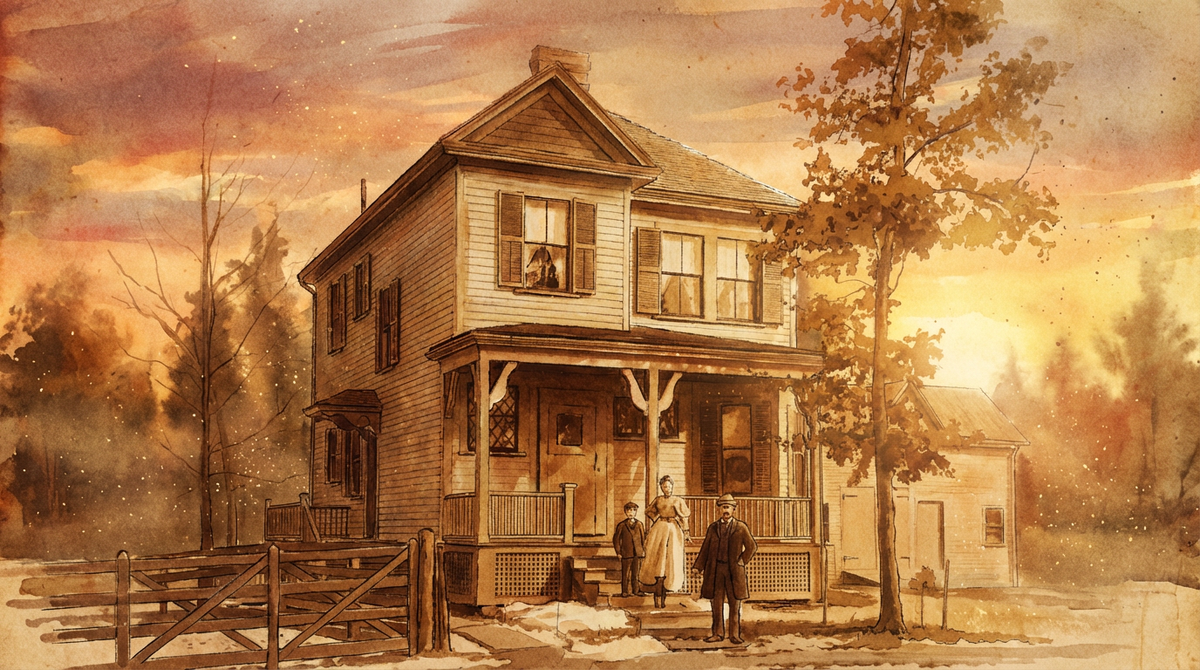
The most important house in American golf is 1,550 square feet with three bedrooms and one and a half bathrooms. It was built in 1887 and it sits directly across Clyde Street from The Country Club.
On September 20, 1913, Francis Ouimet woke up in the second-floor bedroom he shared with his brother Wilfred, walked out the front door, crossed the street, and beat Harry Vardon and Ted Ray in an 18-hole playoff to win the U.S. Open. He was 20 years old, a self-taught amateur, a former caddie at the club across the road. His 10-year-old caddie, Eddie Lowery, had skipped school to carry the bag. There were 350,000 golfers in America that morning. Within a decade there were 2.1 million.
Best Clubhouse's tour of 246 Clyde Street

Charles Schwab is offering new clients up to $1,000 when they open an account and transfer a qualifying amount of cash or equities. Click here to claim your new account reward!
Key Details

J. Campoli & Sons, Northern New Jersey's premier luxury general contractor, has delivered high-end residential and commercial construction in Bergen County since 1946. We have provided three generations of craftsmanship for clients who don't compromise. Learn more.
- Address: 246 Clyde Street, Brookline, Massachusetts
- Year Built: 1887
- Size: ~1,550 square feet; three bedrooms, 1.5 bathrooms
- Notable Features: Second-floor bedroom where Ouimet slept the night before his 1913 U.S. Open victory, with a view of The Country Club's 17th hole; backyard where Francis and Wilfred Ouimet laid out a three-hole course using tomato cans as cups; purchased in 2019 by Boston real estate broker Tom Hynes for $875,000 and restored to its 1913 appearance before the 2022 U.S. Open; during renovation, workers discovered two golf clubs, a toy bow and arrow, a painted coconut, and a Morse code device hidden in the attic eaves, believed to have belonged to the Ouimet children; original bedroom floorboards were removed, de-nailed, planed, re-milled, and reinstalled rather than replaced
Ouimet's father Arthur was a workingman who bought the house because it was affordable, not because it was across the street from a golf club. He had no interest in the game. Francis learned it anyway, watching players from his bedroom window and sneaking onto the course as a caddie. The house stayed in the Ouimet family for 94 years before changing hands. Today it is restored with period furniture, Ouimet's portrait on the walls, and the golf clubs found in the attic. The three-hole backyard course is gone, lost to the neighborhood's development decades ago. But the front door is still a short walk from the 17th green where Ouimet clinched the most unlikely victory in American golf history.
View this post on Instagram
Best Clubhouse covers all things golf clubhouse architecture, golf luxury real estate, and golf development. If you're interested in having your golf club renovation, luxury listing, or architectural project featured on Best Clubhouse, see our partnerships page or reach out at contact@bestclubhouse.com.